What a Studio Makes Knowable

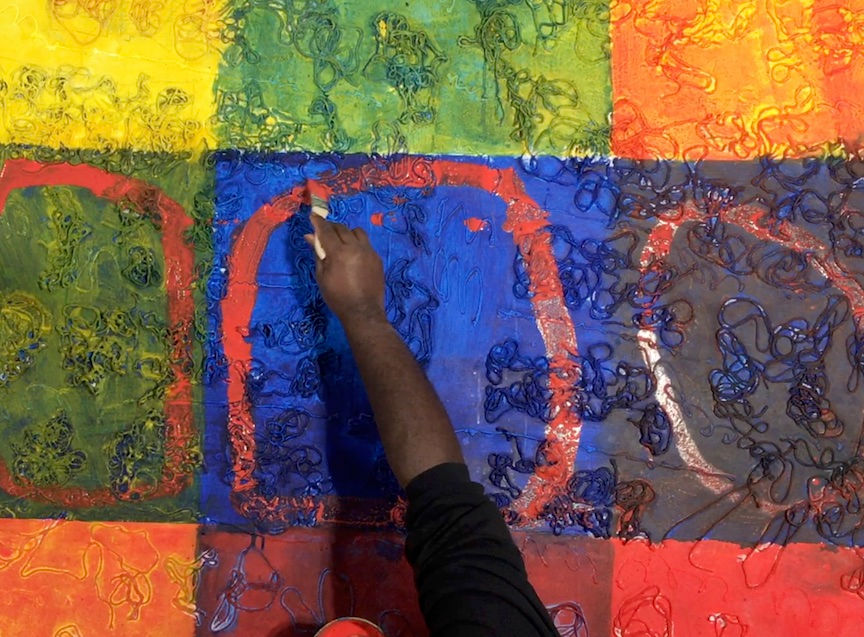
A Progressive Art Studio (PAS) is a place where people create knowledge through making. What an artist learns about a material or about their own preferences can shape what they try next. That kind of knowledge can develop in any studio practice. In a PAS, it develops in a shared space where adults with intellectual and developmental disabilities can build creative practices over years. The collective life of the studio expands what can be learned, who can learn it, and where that knowledge can go next.
Information moves through the studio in many directions. A way of handling a material might come up in conversation, become part of another artist’s practice, or give a PAS Facilitator an idea for what to make available elsewhere in the studio. The same encounter can generate different kinds of knowledge. An artist might discover a preference they can act on before they have words for it. A PAS Facilitator might learn that an invitation becomes more interesting when the artist has time to return to it. What each person learns depends on what they bring to the encounter and what they do with it.
As artists work with materials, they come to know what holds their attention, what they count as a mistake or a success, and what they’re willing to leave as it is. They build taste through those judgments and through the experience of changing their minds.¹ Something they first took for a mistake can become what they’re most curious to revisit. An artwork can carry evidence of what was discovered while it was being made. The artist carries some of that knowledge, too, in what they notice, what they choose, and what they now know how to try.
Part of PAS Facilitation is paying attention to how each artist takes in information and what kind of pace, company, or quiet helps sustain their curiosity. Over time, working alongside an artist teaches a PAS Facilitator when an invitation might be welcome, when to give it time, and when it might be worth bringing back.
That knowledge shapes how a PAS Facilitator offers a challenge. They can communicate what it might give the artist a chance to try, notice, or decide. The artist may already have an idea of what would count as success. Talking about the choices that could open up gives them a reason to consider the offer and room to discover what a successful outcome could look like.
As they work, the artist may find a way of working they want to return to, a preference they can now act on, or a clearer sense of where they want to stop. A PAS Facilitator can give the artist time to consider what happened or make it possible to revisit the experience. The artist decides what’s worth carrying forward.
That’s one way an artist’s own sense of success can expand. What began as an invitation connected to a familiar interest may lead the artist to discover something they didn’t yet know they could value. In taking it up, the artist develops knowledge on their own terms, including what they value in a challenge and what makes a new experience worth seeking out.
¹ For more on how taste develops through what artists encounter and choose to return to, see Taste Is Built Through Exposure. On what artists can discover when the work takes an unexpected turn, see What’s Found While Wandering.

Comments