top of page
Search

Shaping a Relationship to Challenge

  • Writer: Brian A. Kavanaugh
    Brian A. Kavanaugh
  • 3 days ago
  • 3 min read
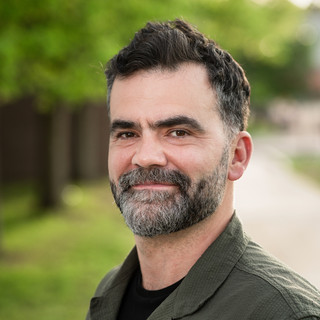
Artist Tom O'Sullivan at work in the Crawford Supported Studio, Ireland

There are elements of the world we do not get to opt out of. 


Sound. 

Smell. 

Time passing.

Sharing space. 

Friction.


And challenge.


In a studio practice, challenge is not an interruption. 

It is one of the conditions of it.


It will arrive uninvited. 

It is also something worthy of being sought.


Materials resist.

Ideas often do not form the way they felt like they should.


Tools can be sharpened.

Processes adjusted.

Challenges alleviated.


They are not removed in the service of ease. 

They are shaped in the service of reach.


To extend what can be experienced. 

To reach into possibility and see what can be brought back.


Challenge is not always the obstruction. 

It is often a propellant.


Challenges are not deviations from the work.

They are part of it — often hidden beneath what becomes the solution.


So the question is not whether challenge will appear, but what one’s relationship to it is.


The studio is an arena for articulating that relationship.

For informing it with one’s own vocabulary.


A successful facilitator demonstrates trust in that process.

While expanding that relationship at a pace responsive to each artist.


We already understand this in other sensory domains.


There are smells we recoil from. 

Sounds we wish would stop. 

Alarms that aren’t ours.


But we do not organize our lives around the fantasy that we will only ever encounter the pleasant ones.


And more than that, there is something quietly disappointing in the idea that we have already encountered all that is possible.


To have smelled all the smells. 

To have heard all the sounds.


That is not mastery. 

It is limitation.


Challenge operates in the same way.

Frustration. 

Confusion. 

Delay. 

The feeling of not understanding something that feels like it should be understood.


If a studio becomes a place where those experiences are avoided, something essential is lost.


Not just resilience. 

Range.


A facilitating artist's responsibility is not to remove challenge from the environment.


They shape a relationship to it that can be shared.


They model it. 

They name it. 

They position it as something that can be welcomed, not something that signals failure.


This may be one of the most important principles a facilitating artist can instill.


Things can, of course, go wrong. 

A sculpture can be dropped and shattered. 

A collage can be carried off by the wind. 

Work can be lost.


But within the act of making, failure is rarely what it appears to be.


Progress often arrives unfamiliar. 

What looks like failure is often contact with something not yet understood.


This is a language. 

Not a set of instructions, but a way of being in contact with the world.


When an artist hits resistance, the facilitator can respond in many ways.


They can redirect. 

They can fix. 

They can simplify.


Or they can stay with the moment and give it form:

“That’s a stubborn material.” 

“It’s pushing back a bit.” 

“You’re figuring out what it allows.”

(For more on this, see Mid-Journey Language.)


These are small shifts. 

But they relocate the experience.


From: 

Something is going wrong. 


To: 

Something is happening. 


A skilled facilitator can also recognize when challenge begins to degrade the experience— when it risks shaking confidence rather than building capacity— and respond accordingly.


Over time, this builds a vocabulary.


Not just in words, but in posture. 

In pacing. 

In willingness to stay.


Challenge becomes something that can be recognized, held, even approached.


And just like with smell or sound, preference still exists.


There are challenges one does not want to encounter again. 

There are edges that are not productive to lean over.


This is not about romanticizing difficulty. 

It is about refusing to collapse all difficulty into something to be eliminated.


Because a life without challenge is not a solved life. 

It is a narrowed one — if not an impossibility.


And a studio that eliminates challenge does not become more supportive. 

It becomes less alive.


Comments


bottom of page